
Veneers in Esquimalt, BC
What Our Patients Say
Custom-Made for Your Smile
See Your New Smile Before It's Permanent
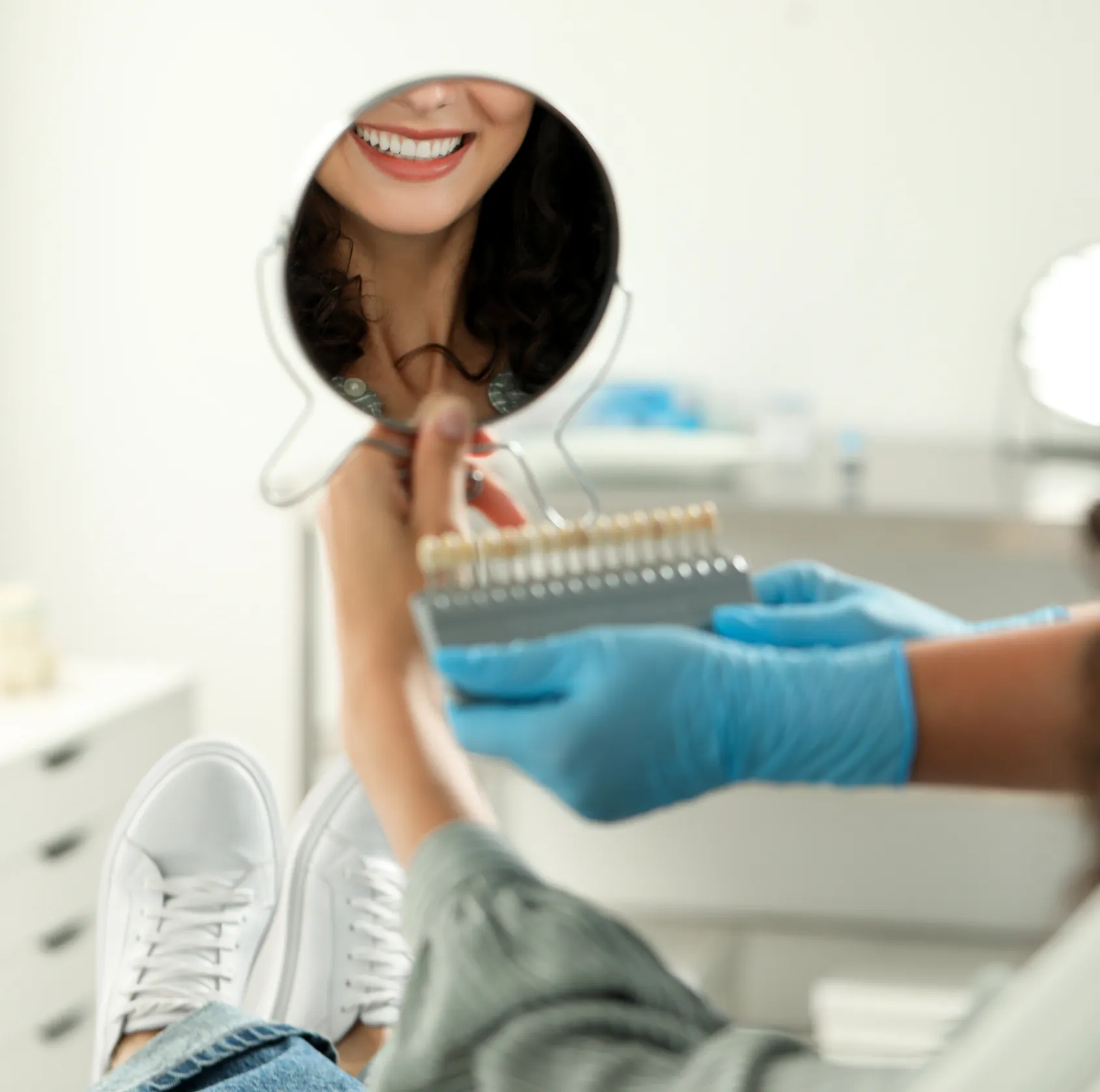
Before any preparation begins, we use digital smile simulation to show you a projected preview of your results. You can ask questions, request adjustments, and take as much time as you need before committing to anything. Nothing moves forward until you're confident in what the outcome will look like.
A Conservative Approach by Default
We start every veneer consultation by exploring the most conservative option that will achieve your goal. For many patients, that means minimal-preparation veneers, which require little to no removal of the natural tooth underneath. Where a more involved preparation is genuinely necessary, we explain why before we proceed.
One Dentist, From Consultation to Completion
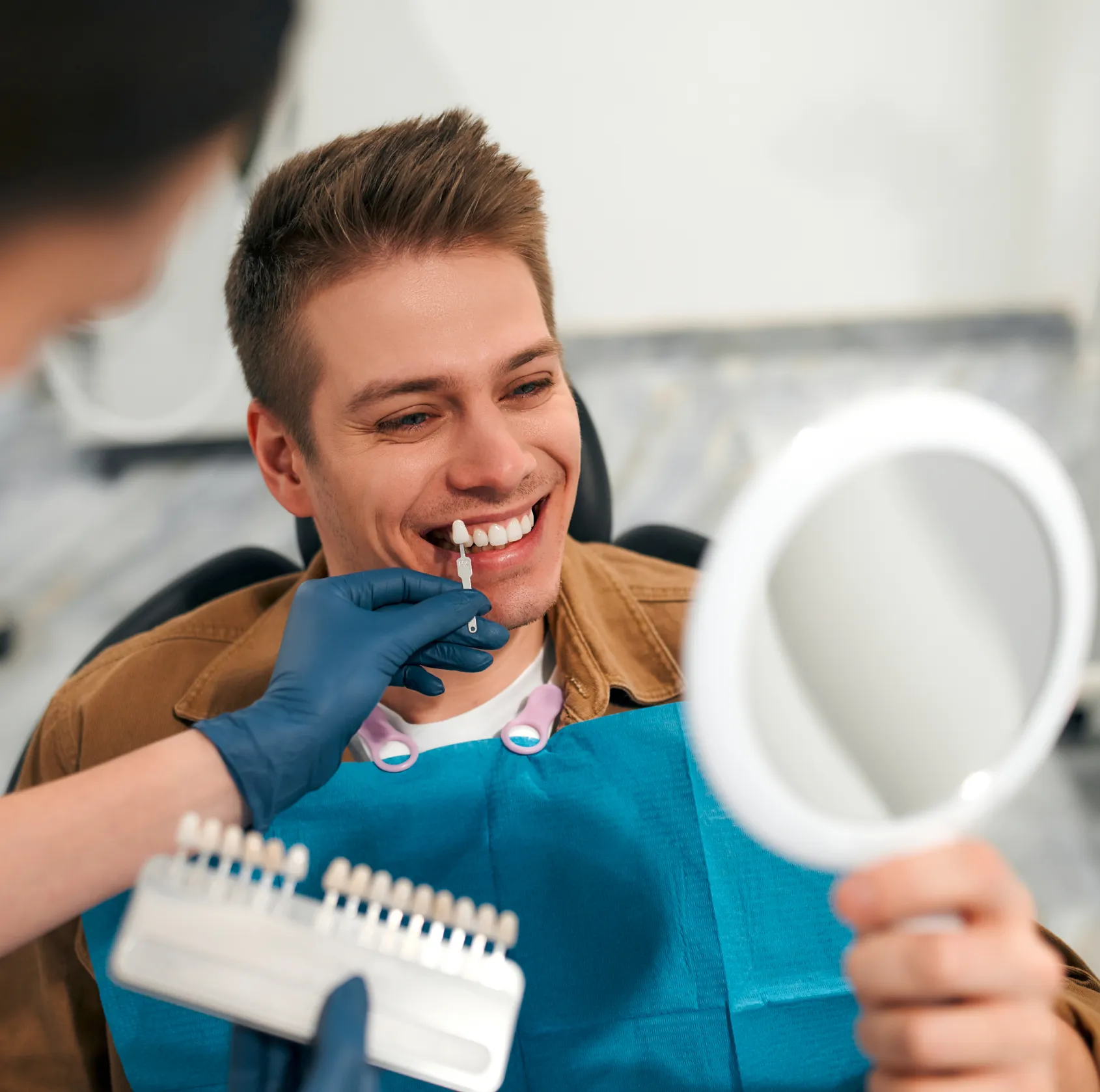
Your veneer treatment is planned and overseen by the same dentist from your first consultation through to your final fitting. That continuity means every detail of your case is understood by the person making the decisions about your smile, and any refinements along the way are informed by the full picture of your treatment.
Insurance and Payments
Understanding Veneers
Veneers are most effective when the concern is primarily cosmetic and the underlying tooth is structurally sound. They are bonded to the front of the tooth and designed to be durable and long-lasting, but they are not the right solution for every situation. Significant structural damage, active decay, or gum disease needs to be addressed before any cosmetic treatment begins.
Veneers are most commonly used to address:
- Chips, cracks, or worn edges on front teeth
- Discolouration that has not responded to whitening
- Gaps between teeth
- Teeth that are uneven in size, shape, or length
- Minor alignment concerns where the appearance of a tooth can be improved without orthodontic treatment
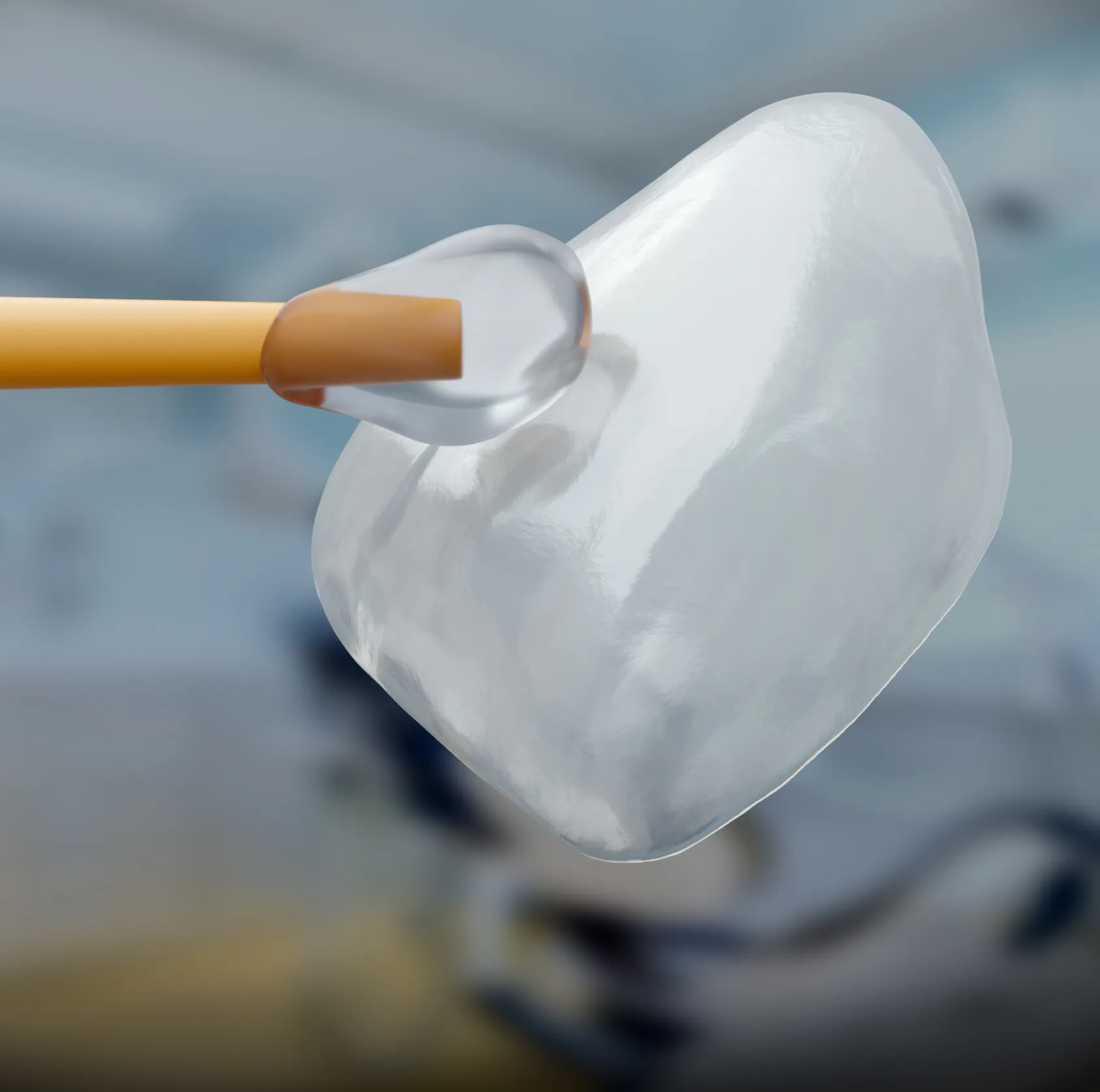
Choosing the Right Material
The material your veneer is made from affects its appearance, durability, and how much natural tooth preparation is required. We offer four options, and we'll help you understand which fits your goals and your situation during your consultation.
Porcelain Veneers
- Highly resistant to staining, with a light-reflective quality that closely resembles natural enamel
- Custom-fabricated in a dental lab over two visits
- A strong choice for patients who want durable, long-lasting results with a consistently natural appearance
Composite Veneers
- Applied and shaped directly onto the tooth in a single visit
- Requires little to no removal of natural tooth structure, and can be repaired easily if chipped
- More susceptible to staining over time and may need touching up after several years
- A strong choice for patients who want a conservative, affordable option, or who want to preview a result before committing to a ceramic veneer
Lithium Disilicate Veneers
- A high-strength glass-ceramic with excellent durability and natural translucency
- Ultra-thin shells can be fabricated from this material while maintaining structural integrity, often allowing for more conservative tooth preparation
- A strong choice for patients who want ceramic durability with minimal impact on their natural tooth structure
Ceramic Veneers
- Made from a pressed ceramic valued for its optical depth and light-reflective properties
- Closely mimics the way natural enamel transmits and reflects light
- A strong choice for patients whose primary concern is a highly natural, lifelike appearance on front teeth

Meet Our Doctor
200+
Kois
UBC
A Comprehensive Approach to Care
Invested in the Long Term





What to Expect When You Choose Veneers
Your Consultation
Your dentist examines your teeth, listens to what you'd like to change, and explains which options are appropriate for your situation. Digital smile simulation gives you a projected preview of your results so you have a clear picture of what's possible before any decisions are made.
Treatment Planning
We confirm which material and preparation approach is right for your case and walk you through the full process, timeline, and cost estimate before any work begins.
Tooth Preparation
For porcelain and ceramic veneers, a thin layer of enamel is gently removed from the front of the tooth to create space for the shell. A digital scan or impression is taken and sent to the dental lab. Temporary veneers are placed to protect your teeth and give you a sense of the final result while your restorations are being fabricated.
Fabrication
Your veneers are custom-fabricated in a dental lab to the exact specifications of your scan, including shade, shape, and dimensions. The fabrication process takes place between your two visits and is where the precision of the planning stage comes to life.
Fitting and Bonding
At your second appointment, the temporary veneers are removed, and the finished shells are checked for fit and appearance before being bonded to your teeth. Your bite, comfort, and the overall look of your smile are all assessed carefully before you leave.
What to Expect
A Thorough Exam
Know What to Expect
We Show You What We See
A Relationship, Not a Transaction
Frequently Asked Questions
How do I care for my veneers after treatment?
Brush and floss as you normally would, using a non-abrasive toothpaste. Attend regular checkups so we can monitor the condition of your veneers over time and address any concerns before they become problems. If anything feels different about your bite after placement, let us know promptly so we can assess and adjust as needed.
Are veneers covered by insurance?
Veneers are a cosmetic treatment and are not covered by most dental insurance plans. We recommend calling the office before your consultation so we can review your benefits and give you a clear picture of costs before you commit to anything.
What is the difference between veneers and crowns?
A veneer covers only the front surface of a tooth and requires minimal preparation of the natural tooth. A crown covers the entire tooth and is used when a tooth is significantly damaged, weakened, or has had a root canal. Where a tooth has enough healthy structure to support a veneer, that is generally the more conservative and appropriate choice.
Can veneers fix crooked teeth?
Veneers can improve the appearance of mildly uneven or misaligned teeth, but they are not a substitute for orthodontic treatment. If the misalignment is significant, addressing the alignment first and using veneers to refine the result afterward may give you the most predictable outcome. We'll give you an honest assessment of what veneers can and cannot achieve during your consultation.
How many veneers do I need?
It depends on your goals. Some patients address a single tooth, while others choose a set of six or eight to achieve an even, consistent result across the front teeth. We'll discuss what makes sense for your specific situation during your consultation.
Is there anything I should avoid after getting veneers?
Veneers are durable but can be damaged by habits such as biting fingernails, chewing ice, or using your teeth to open packaging. If you grind or clench, let us know so we can factor that into your treatment planning and discuss protective options.
What happens if a veneer chips or breaks?
Porcelain and ceramic veneers that chip or break typically need to be replaced rather than repaired. Composite veneers can often be repaired directly in the chair. If you grind your teeth, we may recommend a night guard to protect your veneers from unnecessary stress.
Can veneers be whitened if they discolour over time?
Veneers do not respond to whitening treatments the way natural enamel does. If whitening is part of your plan, it should be done before your veneers are placed so that your surrounding teeth can be matched to your desired shade. We'll walk you through the recommended sequence during your consultation.
Do veneers damage your natural teeth?
Conventional veneers require a small amount of enamel removal, which is permanent. This is why the decision should be made carefully and with full information. Minimal-preparation veneers reduce or eliminate this step for suitable candidates. We explain exactly what preparation is involved for your specific case before you commit to anything.
How long do veneers last?
With proper care, porcelain and ceramic veneers typically last ten to fifteen years or longer. Composite veneers may need touching up or replacement sooner, particularly on teeth under more chewing pressure. Longevity depends on the material chosen, your home care routine, and whether habits like grinding place extra stress on the restorations.
Location
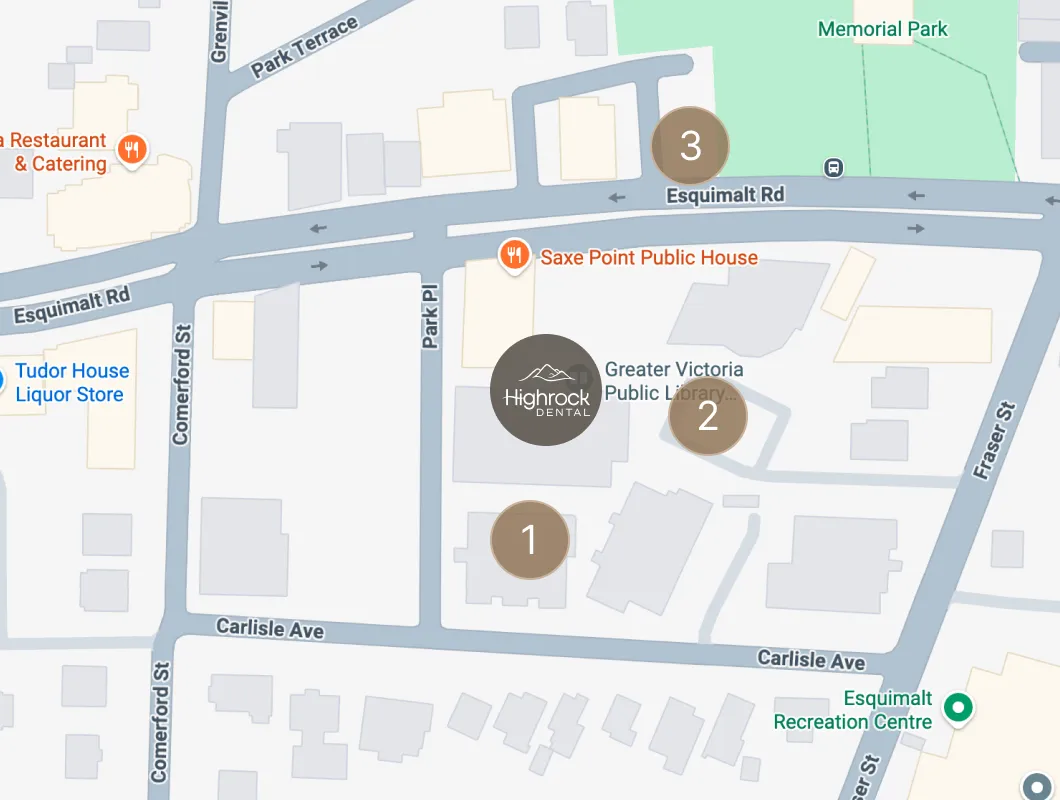
Located on the third floor, two floors above the Esquimalt Public Library. Enter the doors between the library and the coffee shop, take the elevator to the third floor. The office is located to the left when you get out of the elevator. You can access the elevators from the parking garage, take the elevators to the third floor.
503 Park Pl #302, Esquimalt, BC V9A 6Z9- Underground parking in designated stalls in garage off Park Place.
- Above ground parking lot off Fraser St. at $1.50/hr.
- 2hr Free Parking in Public Lot west of Memorial Park.